


ABSTRACT
Background: Hand hygiene is a critical infection prevention measure, yet most initiatives in healthcare focus on healthcare workers rather than patients. Patients’ hands can become contaminated – particularly before meals – and contribute to the transmission of pathogens such as vancomycin-resistant Enterococcus (VRE). This study evaluated whether a simple, low-burden intervention could increase patient hand hygiene compliance and reduce VRE acquisition.
Erica LeBlanc, MPH, CIC1, Jessica Kociper, MPH, MLT1, Selasie Ametorwo, MPH, RN1, Kelsey Houston, MPH, CIC1, Susy Hota, MSc, MD1,2 and Alon Vaisman MD, MAS1,2*
*Corresponding author
Dr. Alon Vaisman
Division Infectious Diseases
Toronto General Hospital, 8 PMB 104, 200 Elizabeth St. Toronto, ON, M5G 2C4
Canada
email: alon.vaisman@uhn.ca
Article history:
Received 1 April 2026
Received in revised form 16 June 2026
Accepted 3 July 2026
ABSTRACT
Background: Hand hygiene is a critical infection prevention measure, yet most initiatives in healthcare focus on healthcare workers rather than patients. Patients’ hands can become contaminated – particularly before meals – and contribute to the transmission of pathogens such as vancomycin-resistant Enterococcus (VRE). This study evaluated whether a simple, low-burden intervention could increase patient hand hygiene compliance and reduce VRE acquisition.
Methods: Two sites within our hospital network implemented a quality improvement intervention in which patients received a single-use ethanol wipe on every meal tray, accompanied by various forms of instruction for use. Importantly, no staff involvement or workflow changes were required beyond awareness of the intervention. Patient hand hygiene adherence was self-reported through structured interviews conducted after meals, during which patients were asked to recall whether they had cleaned their hands before eating. One site used a concurrent control group for comparison, while the other used a pre/post study design. VRE incidence was measured using existing surveillance programs.
Results: At the first site, self-reported hand hygiene before meals was significantly higher among patients receiving the intervention than among controls (91% vs. 70%), with 38% of those who cleaned their hands reporting use of the provided product. At the second site, a similar improvement was observed in the post-intervention group compared with the pre-intervention group (79% vs. 57%), with 34% of those who cleaned their hands reporting use of the provided product. Notably, VRE incidence in the intervention units at the first site decreased from 5.35 to 2.00 cases per 1,000 patient-days, while no hospital-wide change occurred. The intervention was inexpensive, costing approximately $0.40 CAD per patient per day, and was not associated with any reported harms.
Conclusion: This study demonstrates that a simple, low-resource, patient-centred intervention can meaningfully increase patient hand hygiene and may reduce VRE transmission. These findings support further evaluation in other settings and populations.
KEYWORDS:
Patient-centred care, hand hygiene, infection control, and vancomycin-resistant Enterococcus.
INTRODUCTION
Hand hygiene is considered one of the most important infection prevention practices for reducing the transmission of healthcare-associated infections (HAIs). A substantial body of evidence supports hand hygiene in healthcare settings, and improving hand hygiene practices of healthcare workers (HCWs) is a well-researched area (Gould et al., 2017; Price et al., 2018). While most attention focused on healthcare worker hand hygiene, relatively little attention has been paid to promoting patient hand hygiene and the role that patients play in reducing HAIs.
Previous studies support the promotion of patient hand hygiene through multimodal interventions involving HCWs, particularly nursing staff. Examples include having HCWs provide hand hygiene education to patients and visitors (Haverstick et al., 2017; Hedin et al., 2012; O’Donnell et al., 2015; V.C. Sunkesula
et al., 2015; V.C.K. Sunkesula et al., 2017), directly assist with patient hand hygiene (Hedin et al., 2012; V.C.K. Sunkesula et al., 2017), and provide regular encouragement to perform hand hygiene (Haverstick et al., 2017; Hedin et al., 2012; O’Donnell et al., 2015; V.C. Sunkesula et al., 2015; V.C.K. Sunkesula et al., 2017). These studies also improved the accessibility of hand hygiene products, including providing alcohol wipes at mealtimes (Hedin et al., 2012; O’Donnell et al., 2015), and used visual reminders (V.C. Sunkesula et al., 2015). They reported reductions in HAIs, including methicillin-resistant S. aureus (MRSA) (V.C.K. Sunkesula et al., 2017) and vancomycin-resistant Enterococcus (VRE) (Haverstick et al., 2017), following implementation of these patient-centred hand hygiene interventions. Notably, these initiatives required substantial involvement from HCWs already burdened by many competing demands on their time.
An increasingly common HAI, VRE colonizes the gastrointestinal tract and can contaminate the environment. Transmission of VRE from environmental sources to patients has been shown to be one of the key pathways of multidrug-resistant organism transmission in hospitals (Blanco et al., 2019). This is especially relevant around mealtimes, as VRE can be ingested. Increasing patient hand hygiene education and product availability before meals through an interdisciplinary intervention has been shown to produce sustained improvements in patient hand hygiene before meals (O’Donnell et al., 2015).
The aim of our study was to investigate whether patient hand hygiene could be increased through an intervention that placed minimal demands on frontline healthcare providers. Specifically, this quality improvement study examined the effects of providing patients in two acute care facilities with a single-use alcohol wipe accompanied by simple instructions for use on hand hygiene adherence. As a secondary outcome, we aimed to determine whether the intervention affected rates of nosocomial
VRE acquisition.
METHODS
Setting and population
The intervention was implemented at two hospitals within our hospital network on two separate occasions. The first intervention period ran from May 16, 2023 to December 31, 2023 at a 170-bed tertiary oncology centre in Toronto, Canada. Two leukemia units housing patients with acute lymphocytic leukemia, acute promyelocytic leukemia, and acute myeloid leukemia, with a combined total of 33 beds were assigned to the intervention group. Of these, 11 were single-bedded rooms while the remaining beds were located in 11 semi-private rooms with two beds each.
For the analysis of hand hygiene adherence, two solid tumour units with a combined total of 39 beds were assigned as control units where no patient hand hygiene intervention was implemented. Of these beds, 19 were in single-bedded room while the remainder were in 10 semi-private rooms. The solid tumour units were selected as controls rather than the bone marrow transplant units because of their more comparable baseline infection prevention knowledge. Patients in the bone marrow transplant program receive more comprehensive education on infection prevention practices during their admission, such as chlorhexidine bathing. As a result, these patients were expected to have higher baseline hand hygiene adherence than patients on the leukemia units, whereas patients on the solid tumour units were thought to be more comparable. For the analysis of nosocomial VRE acquisition, the remainder of the hospital served as the control with no additional hand hygiene intervention implemented.
The second intervention period ran from October 14, 2024 to December 22, 2024 at a 471-bed general hospital in Toronto, Canada. The intervention was introduced on two units comprising an 82-bed solid organ transplant program without a concurrent control group. Instead, hand hygiene adherence was measured before and during implementation of the intervention within the same patient population. Unlike the first study site, no comparable control group existed for transplant patients at this hospital.
Study design
Patients in the intervention group were provided with a single-use, pre-packaged Clorox® 62% ethyl alcohol wipe on their meal trays by the hospital’s Nutrition Services department at all three daily meals.
At the first site, the alcohol wipes were accompanied by an information card explaining how and when to use the wipe (Figure 1). These cards were provided only in English, and frontline staff did not assist patients who were unable to read them. All patients admitted to the oncology hospital routinely received a booklet containing information related to their inpatient oncology care.
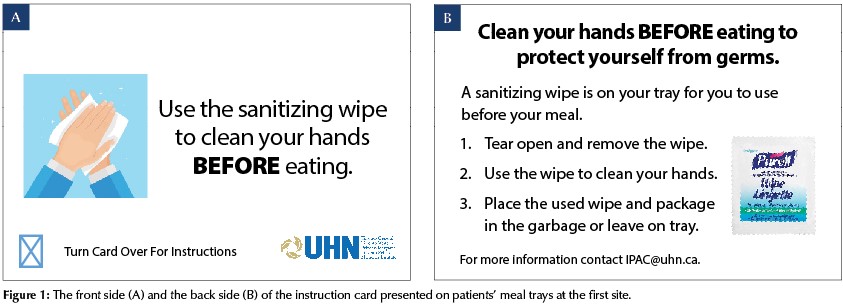
For patients in the intervention group, an additional page was included indicating that they would be provided with an alcohol wipe and instructions to use it before meals. Notably, frontline staff were not asked to provide education regarding the hand hygiene product, but were made aware of the intervention during the implementation phase.
At the second site, neither the instruction card nor the information page in the admission booklet was provided in an effort to refine the intervention and further reduce costs and environmental waste. Instead, ward clerks made a daily announcement at lunch reminding patients to use the provided alcohol wipe to clean their hands before eating. As at the first site, staff were aware of the intervention but were not instructed to discuss it with patients.
Alcohol wipes were identified as an appropriate product for this patient population based on input from two in-depth interviews with patient representatives through the organization’s patient partnership program. The instruction card was also developed with input from these representatives. Both the instruction card and the admission booklet insert were approved by the Patient Experience department. The study received Research Ethics Board exemption and approval from the hospital’s Quality Improvement Review Committee (QIRC #23-0594).
Primary and secondary outcome measures
Patient hand hygiene adherence was measured through interviews conducted after meals. Interviewers visited the units shortly after meals were served, typically within two hours. The interviews were conducted by members of the Infection Prevention and Control department. Before asking the interview questions, interviewers followed a script approved by the Quality Improvement Review Committee explaining that participation was voluntary and anonymous and obtaining patient consent to participate. Interviewers asked patients the following hand hygiene questions without disclosing the purpose for the interviews:
1. Were you able to clean your hands before eating this meal, cleaning hands includes any type of hand cleansing product? Y/N
If answer to Question 1 is Yes:
a. What did you use to clean your hands: Alcohol wipe/wall-mounted sanitizer/ portable sanitizer/ soap and water/other
b. Was it easily accessible: Yes/Somewhat/No (Why?)
c. Were you satisfied with the product? Yes/Somewhat/No
If answer to Question 1 is No:
a. Is there a particular reason why you didn’t clean your hands?
b. Was there a product available for you to use? Yes/Somewhat/No/Don’t
Due to the narrow scope and limited number of questions, the interview questions were not formally validated. All patients on the units who were awake and in their rooms at the time of the interviews were asked to participate in the survey, with the exclusion of any patient deemed unable to participate based on the discretion of frontline unit staff. This decision was based on level of consciousness or language barriers. Patients were interviewed after a meal and were asked whether they cleaned their hands prior to the meal and what method of hand hygiene was used. If hand hygiene was not performed, patients were asked for the reason. The interview questions were approved by the Patient Experience department. Identical interview questions were asked, and identical methods were used on both the control and intervention units, as well as at both sites. At the first site, interviews were collected every two weeks, alternating between control and intervention patients. There were no differences from week to week, and this schedule was chosen based on the capacity of the interviewers. At the second site, pre-intervention interviews were conducted during the two months leading up to the intervention rollout and continued for two months during the intervention period.
VRE incidence was used as an outcome measure for the first site only, as the study period at the second site was not long enough to assess VRE trends over time. All units in this study had a pre-existing VRE screening and isolation program whereby all admitted patients routinely underwent rectal swabbing for VRE colonization on admission, every 30 days during an admission, and after an exposure to a positive roommate if one were to occur. Neither screening frequency nor diagnostic practices changed for the duration of the study. If positive, patients were isolated in a single-bed room on contact precautions. We prospectively tracked positive screening swabs and clinical isolates for surveillance purposes. Both screening swabs and clinical isolates were included in the numerator when calculating VRE incidence. Furthermore, total admitted patient-days were collected for all units. These values were used to calculate the incidence rate of VRE cases per 1,000 patient-days during the seven-month intervention period and during the seven months prior to intervention rollout.
Statistics
To determine whether hand hygiene adherence significantly differed between the intervention and control groups, as well as between the pre-intervention and intervention periods, a Chi-square test was used to compare interview responses between groups. At the first site, a t-chart measuring the number of days between consecutive VRE cases was used to compare the incidence of VRE acquisition during the intervention period between the intervention units and the remainder of the hospital. The remainder of the hospital was used as the control for this calculation because it provided a larger and more stable comparator group, improving statistical power. This control also better captured secular trends across the whole hospital. For the study at the second site, the outcome measure included only a comparison of hand hygiene rates before and after the intervention using a Chi-square test.
RESULTS
At the first site, during the seven-month intervention period, more than 15,000 wipes were dispensed to patients on the intervention units, and 167 patients were interviewed. On the intervention units, 79 of 87 patients (91%) reported cleaning their hands before eating a meal using any hand hygiene product, compared with 56 of 80 patients (70%) on the control units (X² = 11.65, p < 0.05). Among those in the intervention group who reported cleaning their hands, 38% reported using the provided hand hygiene product (Table 1).
Similarly, at the second site, 67 of 85 patients (79%) in the post-intervention group reported cleaning their hands before eating a meal using any hand hygiene product, compared with 49 of 86 patients (57%) in the pre-intervention group (X² = 9.35, p < 0.05). Among those who cleaned their hands in the post-intervention group, 34% reported using the provided hand hygiene product (Table 1).
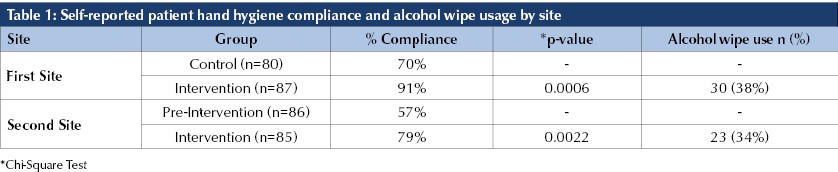
Across both sites, soap and water was the most commonly used method of hand hygiene before meals. At the first site, when stratified by isolation status, both the intervention and control groups showed high hand hygiene adherence among patients on isolation (93.3% and 92.8%, respectively). However, among patients who were not on isolation, there was a greater disparity between the intervention and control groups (90.3% and 65.1%, respectively) (data not shown).
Nosocomial VRE incidence rates during the seven-month intervention period were compared with those during the seven months preceding the intervention at the first site. During the intervention period, the combined incidence of VRE on the intervention units was 2.00 cases per 1,000 patient-days, compared with 5.35 cases per 1,000 patient-days during the seven months before the intervention (t = 3.24, p = 0.0006), indicating a significant decrease during the intervention period. Using t-chart analysis, we found that special cause variation occurred on the intervention units following introduction of the intervention (Figure 2A), whereas no special cause variation occurred in the remainder of the hospital during the same period (Figure 2B).
DISCUSSION
The results of this study demonstrate that a low-maintenance, easily implemented, and economical intervention can significantly improve patient hand hygiene adherence. Specifically, patients who were provided with an alcohol wipe and instructions for use had a roughly 21% higher self-reported hand hygiene adherence rate than those who did not receive the intervention at the first site and a 22% higher self-reported adherence rate at the second site. Over the seven-month study period, VRE incidence rates also declined among the intervention population at the first site.
No significant change was observed in hospital-wide VRE incidence rates over the same period, suggesting that the reduction in VRE rates was not related to background secular trends. Furthermore, the intervention appeared to have a greater impact on hand hygiene adherence among non-isolated patients. We hypothesize that this is because patients on isolation have a stronger understanding of infection prevention measures through both education and direct experience with isolation precautions, thereby requiring less reinforcement.
Our findings align with previous literature demonstrating that interventions targeting patient hand hygiene can significantly improve adherence, particularly before meals by as much as 83% (Haverstick et al., 2017; Hedin et al., 2012; V.C. Sunkesula et al., 2015). These interventions have also been linked to significant reductions in hand bioburden and infection rates, including reductions in VRE of up to 70% (Hedin et al., 2012; O’Donnell et al., 2015). Similarly, interdisciplinary initiatives focused on patient hand hygiene education and improved access to supplies have reduced MRSA and C. difficile infections by 51% per 1,000 admissions (Gagné et al., 2010) and from 10.45 to 6.95 infections per 10,000 patient-days (Pokrywka et al., 2014), respectively. Additional strategies such as scheduled administration of alcohol-based hand rub for patients and patient- and visitor-centred educational materials have been shown to decrease the number of respiratory outbreaks and overall nosocomial infection rates by 36.1% (Cheng et al., 2007; Hilburn et al., 2003).
Although other studies have reported larger reductions in healthcare-associated infection rates, these initiatives were labour-intensive and required additional responsibilities from staff, including patient education. Our study is notable because it did not require additional time commitments from frontline staff. Alcohol wipes were added to patient meal trays before reaching the unit, and instructions were provided through information cards and announcements without requiring staff involvement. Although we could not quantify the exact impact on frontline staff workload, their role was limited to being aware of the intervention and informing interviewers which patients should not be approached. Thus, our intervention was less demanding than previously described interventions requiring active participation from frontline staff. Additionally, no harms attributable to the intervention were reported.
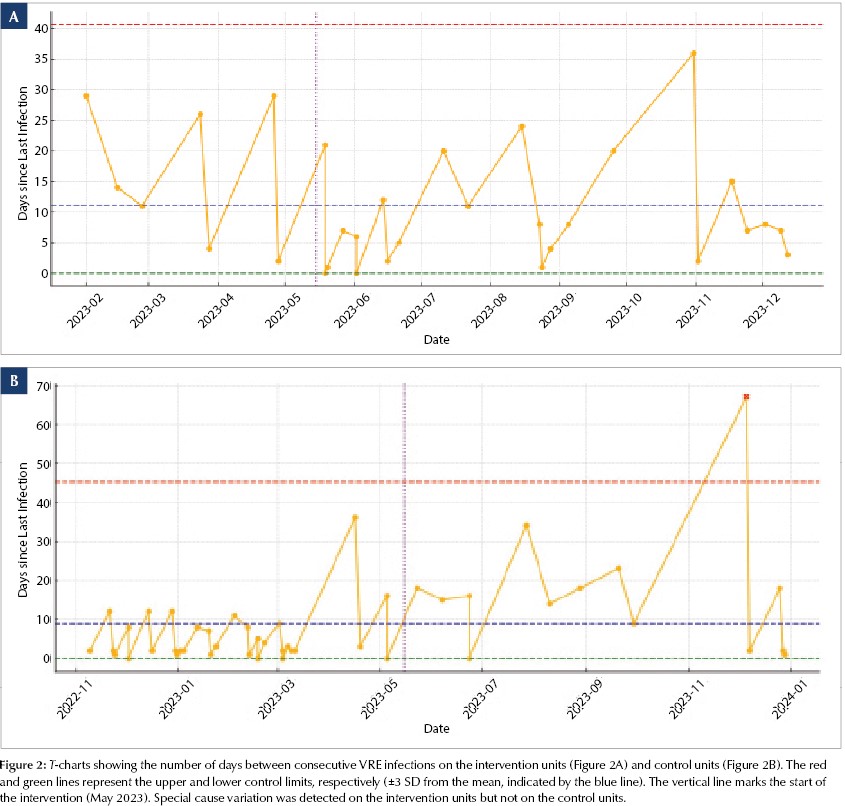
Another notable outcome of our study was the reduction in VRE incidence during the intervention period. We observed a reduction of 3.35 cases per 1,000 patient-days in the intervention group at the first study site. While there are potential threats to this causal inference due to secular trends, which we attempted to address using control groups, it is notable that even a modest improvement in VRE rates is likely worthwhile given the minimal effort and cost associated with the intervention. The alcohol wipes were purchased in cases of 1,000 for $38.30 CAD. The information cards were printed through our facility’s internal printing services at a cost of approximately $170 CAD for 600 cards. Thus, providing a patient with an alcohol wipe three times daily and one information card per day cost approximately $0.40 CAD per patient per day. Over the seven-month study period, the intervention cost approximately $1,167 CAD across roughly 6,500 patient-days. In Canada, the total hospital cost attributable to a patient with VRE has been estimated to be approximately $18,000 CAD higher than that of a patient without VRE (Lloyd-Smith et al., 2013). Based on these estimates, the intervention would be cost-saving if it prevented as few as 0.01 cases per 1,000 patient-days, meaning that preventing even a single case would justify its implementation from a financial perspective. Finally, because VRE infection is associated with a 30-day mortality rate of 57.7% (Hemapanpairoa et al., 2021), even a small reduction in incidence suggests that this low-cost intervention is likely to be highly cost-effective.
A notable limitation of our study was the method used to assess hand hygiene adherence. As with many studies evaluating hand hygiene practices, our study is subject to the Hawthorne effect because adherence data were collected through self-reported interviews rather than direct observation. While this may have inflated the adherence rates, the effect likely influenced all groups equally, including the intervention and control groups at the first site and the pre- and post-intervention groups at the second site because data collection methods were consistent throughout. Therefore, although the absolute adherence rates may have been overestimated, the relative differences between groups are likely to be reliable. This study is also subject to recall bias, as patients were asked to recall events after they had occurred. To minimize recall bias, interviewers were informed of each unit’s meal schedule and conducted interviews as soon after meals as possible, typically within two hours. As with the Hawthorne effect, recall bias is unlikely to have affected one group more than another because the data collection methods remained consistent. Another limitation is that hand hygiene was assessed as a binary outcome (performed versus not performed). Consequently, the study did not evaluate the quality of hand hygiene practices, including adherence to recommended technique or duration. This study was also conducted within a single tertiary hospital network, which may limit the generalizability of the findings to other institutions and patient populations. Finally, we did not control for potential time-dependent factors, such as seasonality that may have contributed to the observed reduction in VRE rates.
In summary, patient hand hygiene adherence and VRE incidence may be improved by providing patients with an easy-to-use, conveniently accessible hand hygiene product accompanied by simple instructions for use before meals, with minimal involvement from frontline staff. Further studies should evaluate the effectiveness of this intervention in other patient populations and healthcare settings.
REFERENCES
Alevizakos, M., Gaitanidis, A., Nasioudis, D., Tori, K., Flokas, M. E., & Mylonakis, E. (2017). Colonization with vancomycin-resistant enterococci and risk for bloodstream infection among patients with malignancy: A systematic review and meta-analysis. Open Forum Infectious Diseases, 4(1), ofw246. https://doi.org/10.1093/ofid/ofw246
Blanco, N., O’Hara, L. M., & Harris, A. D. (2019). Transmission pathways of multidrug-resistant organisms in the hospital setting: A scoping review. Infection Control & Hospital Epidemiology, 40(4), 447–456.https://doi.org/10.1017/ice.2018.359
Canadian Nosocomial Infection Surveillance Program. (2022). Healthcare-associated infections and antimicrobial resistance in Canadian acute care hospitals, 2016–2020. Canada Communicable Disease Report, 48(7–8). https://doi.org/10.14745/ccdr.v48i78a03
Cheng, V. C. C., Wu, A. K. L., Cheung, C. H. Y., Lau, S. K. P., Woo, P. C. Y., Chan, K. H., Li, K. S. M., Ip, I. K. S., Dunn, E. L. W., Lee, R. A., Yam, L. Y. C., & Yuen, K. Y. (2007).
Outbreak of human metapneumovirus infection in psychiatric inpatients: Implications for directly observed use of alcohol hand rub in prevention of nosocomial outbreaks. Journal of Hospital Infection, 67(4), 336–343. https://doi.org/10.1016/j.jhin.2007.09.010
Gagné, D., Bédard, G., & Maziade, P. J. (2010). Systematic patients’ hand disinfection: Impact on meticillin-resistant Staphylococcus aureus infection rates in a community hospital. Journal of Hospital Infection, 75(4), 269–272. https://doi.org/10.1016/j.jhin.2010.02.028
Gould, D. J., Moralejo, D., Drey, N., Chudleigh, J. H., & Taljaard, M. (2017). Interventions to improve hand hygiene compliance in patient care. Cochrane Database of Systematic Reviews, 2017(9), CD005186. https://doi.org/10.1002/14651858.CD005186.pub4
Haverstick, S., Goodrich, C., Freeman, R., James, S., Kullar, R., & Ahrens, M. (2017). Patients’ hand washing and reducing hospital-acquired infection. Critical Care Nurse, 37(3), e1–e8. https://doi.org/10.4037/ccn2017694
Hedin, G., Blomkvist, A., Janson, M., & Lindblom, A. (2012). Occurrence of potentially pathogenic bacteria on the hands of hospital patients before and after the introduction of patient hand disinfection. APMIS, 120(10), 802–807. https://doi.org/10.1111/j.1600-0463.2012.02912.x
Hemapanpairoa, J., Changpradub, D., Thunyaharn, S., & Santimaleeworagun, W. (2021). Does vancomycin resistance increase mortality? Clinical outcomes and predictive
factors for mortality in patients with Enterococcus faecium infections. Antibiotics, 10(2), 105. https://doi.org/10.3390/antibiotics10020105
Hilburn, J., Hammond, B. S., Fendler, E. J., & Groziak, P. A. (2003). Use of alcohol hand sanitizer as an infection control strategy in an acute care facility. American Journal of Infection Control, 31(2), 109–116. https://doi.org/10.1067/mic.2003.15
Johnstone, J., Shing, E., Saedi, A., Adomako, K., Li, Y., Brown, K. A., & Garber, G. (2020). Discontinuing contact precautions for vancomycin-resistant Enterococcus (VRE) is associated with rising VRE bloodstream infection rates in Ontario hospitals, 2009–2018: A quasi-experimental study. Clinical Infectious Diseases, 71(7), 1756–1759.
https://doi.org/10.1093/cid/ciaa009
Lary, D., Calvert, A., Nerlich, B., Segal, J., Vaughan, N., Randle, J., & Hardie, K. R. (2020). Improving children’s and their visitors’ hand hygiene compliance. Journal of Infection Prevention, 21(2), 60–67. https://doi.org/10.1177/1757177419892065
Lloyd-Smith, P., Younger, J., Lloyd-Smith, E., Green, H., Leung, V., & Romney, M. G. (2013). Economic analysis of vancomycin-resistant enterococci at a Canadian hospital: Assessing attributable cost and length of stay. Journal of Hospital Infection, 85(1), 54–59. https://doi.org/10.1016/j.jhin.2013.06.016
O’Donnell, M., Harris, T., Horn, T., Midamba, B., Primes, V., Sullivan, N., Shuler, R., Zabarsky, T. F., Deshpande, A., Sunkesula, V. C. K., Kundrapu, S., & Donskey, C. J. (2015). Sustained increase in resident meal time hand hygiene through an interdisciplinary intervention engaging long-term care facility residents and staff. American Journalof Infection Control, 43(2), 162–164. https://doi.org/10.1016/j.ajic.2014.10.018
Pokrywka, M., Feigel, J., Douglas, B., Grossberger, S., Hensler, A., Hensler, A., & Weber, D. (2014). A bundle strategy including patient hand hygiene to decrease Clostridioides difficile infections. Medsurg Nursing, 23(3), 145–148, 164. Price, L., MacDonald, J., Gozdzielewska, L., Howe, T., Flowers, P., Shepherd, L., Watt, Y., & Reilly, J. (2018). Interventions to improve healthcare workers’ hand hygiene compliance: A systematic review of systematic reviews. Infection Control & Hospital Epidemiology, 39(12), 1449–1456.
https://doi.org/10.1017/ice.2018.262
Public Health Agency of Canada. (2023, November 18). Antimicrobial resistance: Seasonal update.
https://health-infobase.canada.ca/carss/amr/results.html?ind=10
Reyes, K., Bardossy, A. C., & Zervos, M. (2016). Vancomycin-resistant enterococci. Infectious Disease Clinics of North America, 30(4), 953–965. https://doi.org/10.1016/j.idc.2016.07.009
Sunkesula, V. C. K., Kundrapu, S., Knighton, S., Cadnum, J. L., & Donskey, C. J. (2017). A randomized trial to determine the impact of an educational patient hand-hygiene intervention on contamination of hospitalized patients’ hands with healthcare-associated pathogens. Infection Control & Hospital Epidemiology, 38(5), 595–597. https://doi.org/10.1017/ice.2016.323
Sunkesula, V. C., Knighton, S., Zabarsky, T. F., Kundrapu, S., Higgins, P. A., & Donskey, C. J. (2015). Four moments for patient hand hygiene: A patient-centered, provider-facilitated model to improve patient hand hygiene. Infection Control & Hospital Epidemiology, 36(8), 986–989. https://doi.org/10.1017/ice.2015.78
Wong, M. W. H., Xu, Y. Z., Bone, J., & Srigley, J. A. (2020). Impact of patient and visitor hand hygiene interventions at a pediatric hospital: A stepped wedge cluster randomized controlled trial. American Journal of Infection Control, 48(5), 511–516. https://doi.org/10.1016/j.ajic.2019.09.026