


ABSTRACT
Background: Sepsis is a life-threatening condition and a major cause of morbidity and mortality. There is increasing global emphasis on reducing hospital-acquired sepsis (HAS). However, hospital infection prevention and control (IPAC) programs have not traditionally participated in sepsis surveillance. This study describes the integration of sepsis surveillance into an IPAC program to support the early identification of sepsis events.
Carla Feltrin, MSc, BA1*, Anna Boric, MBA1, Emily Lingaitis, HBSc1, Nicole Gallaher, HBSc1, Lindsay Hampton-Hampejskova, MScPH1, BPA, and Karim F. Ali, MBBS1
1 Niagara Health System, St. Catharines, Ontario, Canada
*Corresponding author
Carla Feltrin, MSc, BA
Niagara Health System
St. Catharines, ON Canada
Article history:
Received 5 January 2026
Received in revised form 27 April 2026
Accepted 20 May 2026
ABSTRACT
Background: Sepsis is a life-threatening condition and a major cause of morbidity and mortality. There is increasing global emphasis on reducing hospital-acquired sepsis (HAS). However, hospital infection prevention and control (IPAC) programs have not traditionally participated in sepsis surveillance. This study describes the integration of sepsis surveillance into an IPAC program to support the early identification of sepsis events.
Methods: A quality improvement initiative using the Plan-Do-Study-Act model was conducted across several Canadian hospitals between April 2023 and January 2025. Multimodal interventions included education and sepsis surveillance to classify sepsis as either community-acquired or hospital-acquired. A retrospective cohort pilot study was conducted between November 9, 2024, and January 31, 2025, through the review of electronic health records to identify the origin of sepsis, characterize infection sources associated with mortality risk, and validate data reporting for future prevention strategies.
Results: During the study period, 248 real-time sepsis diagnosis alerts were reviewed, of which 232 (93.5%) were community-acquired and 16 (6.5%) were hospital-acquired. Mortality was significantly higher among patients with HAS (37.5%) than among those with community-acquired sepsis (12.5%) (RR = 3.0, 95% CI [1.46, 6.15], p = 0.014). Among 290 infection sources, 22 (7.6%) were hospital-acquired, with urinary tract infection (UTI) being the most common (31.8%). Mortality was significantly lower among patients with UTI sources (8.8%) than among those with non-UTI sources (18.7%) (RR = 0.47, 95% CI [0.28, 0.80], p = 0.040). From November to January, HAS rates increased from 3.80 to 5.71 per 1,000 discharges, with 16 of 25 cases validated by IPAC surveillance.
Conclusions: The findings of the current study demonstrate higher mortality among patients with hospital-acquired sepsis than among those with community-acquired sepsis. This sepsis surveillance system may serve as a valuable addition to hospital surveillance and quality improvement programs by providing insights into sepsis classification and infection sources.
KEYWORDS:
Sepsis, surveillance, infection prevention and control, digital alerts, education
INTRODUCTION
Sepsis is a life-threatening condition caused by a dysregulated immune response to infection that can lead to organ failure, shock, and death (World Health Organization, 2024). The risk of mortality increases by up to 8% for every hour of delayed treatment (Sepsis Canada, 2024). Despite advances in clinical care, the burden of sepsis remains a major global health priority, with approximately 49 million cases and 11 million deaths reported worldwide in 2017 (World Health Organization, 2020). In Canada, approximately 75,000 cases occur annually, making sepsis the 14th leading cause of death and contributing to one in 18 fatalities (The Ottawa Hospital Foundation, 2025).
Sepsis cases are generally classified as community-acquired sepsis (CAS) when identified within the first 48 to 72 hours of hospitalization and as hospital-acquired sepsis (HAS) when diagnosed later during the hospital stay (Centers for Disease Control and Prevention [CDC], 2025; Westphal et al., 2019). It is estimated that 80% of sepsis cases originate outside the hospital, with 20% to 40% of CAS cases requiring intensive care (Szabo et al., 2019). However, approximately 30.7% of HAS cases are associated with longer hospital and intensive care unit (ICU) stays (Garvey, 2024), while some studies report that 55% of all sepsis cases require ICU admission (Markwart et al., 2020). The increasing prevalence of sepsis is further associated with ageing populations, invasive medical procedures, immunosuppressive therapies, and antimicrobial resistance (Guarino et al., 2023).
To reduce sepsis-related harm, health care facilities are implementing performance improvement programs to monitor sepsis incidence and develop targeted prevention strategies. Historically, our hospital’s sepsis performance program has not tracked trends in healthcare-associated infection (HAI) sources, causative pathogens, isolation practices, antibiotic administration timing relative to sepsis onset, or collaborated with Infection Prevention and Control (IPAC) programs to validate HAS classifications. The literature also highlights the importance of multidisciplinary collaboration in sepsis prevention, including the integration of IPAC expertise into sepsis improvement initiatives (Barrett and Sheikh, 2024;
CDC, 2025).
The Canadian Institute for Health Information (CIHI) reports in-hospital sepsis events using discharge data from acute care facilities. These indicators are risk-adjusted using available benchmark data from Canadian hospitals and are reported as the number of in-hospital sepsis events (with a length of stay of two days or longer) per 1,000 discharges annually. However, variability in coding practices, timing of diagnosis, and clinical documentation can complicate the distinction between CAS and HAS, affecting the accuracy and comparability of these metrics (CIHI, 2024).
We describe the implementation of a sepsis surveillance program using electronic notification alerts integrated within the Millennium electronic health record (EHR) system. Enhanced monitoring of sepsis events may generate actionable insights to support hospital sepsis performance improvement programs.
METHODS
Context
This pilot study was conducted from April 2023 to January 2025 and aimed to enhance sepsis monitoring and awareness across five Canadian teaching community hospitals (approximately 1,054 inpatient beds). These sites operate within a regional academic network and are supported by a centralized IPAC team of 15 Infection Control Practitioners (ICPs). In September 2024, 350 clinical staff members received education on sepsis recognition and surveillance. An EHR review was conducted from November 9, 2024 to January 31, 2025, to examine all hospitalized patients with prescriber-documented sepsis (n = 248 of 9,737 total admissions) and establish baseline metrics coinciding with the EHR system go-live date.
Operational sepsis surveillance case definitions for community-acquired sepsis (CAS) and hospital-acquired sepsis (HAS) were adapted from the CDC Hospital Sepsis Program Core Elements (2025). HAS was defined as a physician-documented sepsis diagnosis occurring more than 48 hours after hospital or emergency department arrival. Infection sources were classified as healthcare-associated or community-acquired using sepsis surveillance case definitions. Confirmed sepsis cases were identified through physician documentation in the EHR.
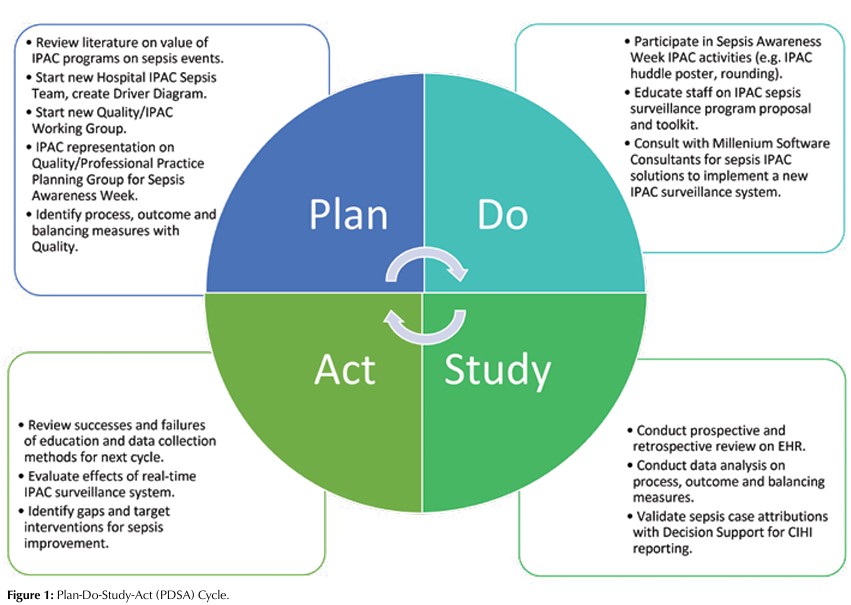
Using the Institute for Healthcare Improvement (2023) Plan-Do-Study-Act (PDSA) framework, the study assessed feasibility and early outcomes (Figure 1).
Interventions
Plan
Initial steps involved conducting a rapid literature review to examine IPAC program involvement in sepsis surveillance using PubMed, Cochrane, and Medline databases. Search terms included “infection control”, “sepsis”, and “surveillance”. The search yielded 30 records. After screening titles, abstracts, and full texts, four studies were included in the analysis (Bloos, 2020;
Chan et al., 2026; Currey et al., 2023; Orosz et al., 2020). Most articles focused on early sepsis identification, epidemiology, and electronic surveillance; however, a key gap identified
was the limited involvement of IPAC programs in sepsis improvement initiatives.
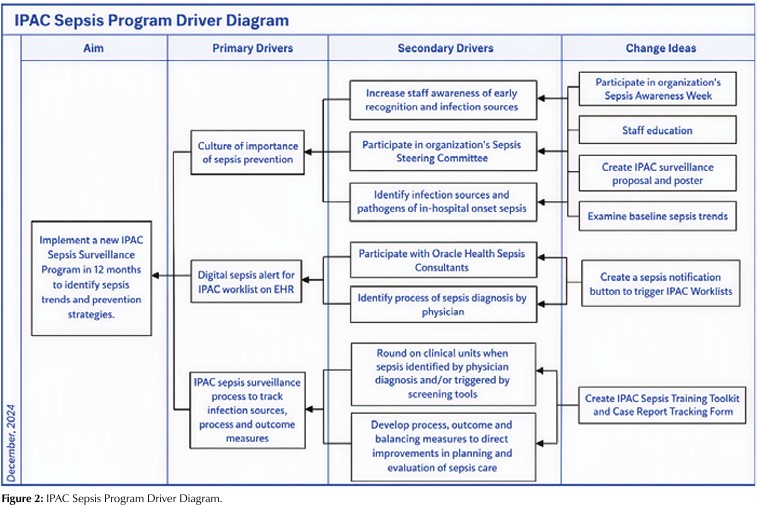
The planning phase focused on developing sepsis surveillance processes and increasing awareness across hospitals through education. An IPAC sepsis team was established with representation from Quality, Professional Practice, and Leadership. Regular multidisciplinary meetings were held to support the development of IPAC sepsis notification alerts. An IPAC Sepsis Program Driver Diagram (Figure 2) outlined objectives, primary and secondary drivers, and intervention strategies.
Do
This phase focused on education and surveillance to identify factors influencing implementation success or failure. An IPAC proposal and toolkit outlining screening tools, clinical surveillance processes, documentation requirements, sepsis care bundles, and antibiotic stewardship strategies were developed.
In September 2024, an inaugural Sepsis Awareness Week was held across all inpatient units at five facilities and included clinical rounding, huddles, information booths, and educational tools. Training focused on clinical areas, emphasizing early sepsis identification, notification protocols, and the role of IPAC.
The new EHR incorporated two adult screening tools adapted from the National Early Warning Score (NEWS) and Systemic Inflammatory Response Syndrome (SIRS) criteria for use in emergency and inpatient settings. Staff documented temperature, pulse, respiratory rate, oxygen saturation, supplemental oxygen use, and the Alert, Verbal, Pain, Unresponsive (AVPU) scale to assess level of consciousness. These inputs generated SIRS and NEWS scores to determine sepsis risk. A NEWS score of 0 to 4 indicated low risk, 5 to 6 indicated moderate risk, and >7 indicated high risk. Both moderate- and high-risk scores required physician notification.
A novel EHR integration was developed to enable real-time sepsis notifications by linking physician diagnoses entered in the Millennium system directly to IPAC worklists. This process ensured prompt notification of IPAC teams for every sepsis case. The IPAC team completed case follow-up, and the Sepsis team reviewed and validated cases and the data in collaboration with the Decision Support and Coding departments.
Study
A prospective and retrospective EHR review was conducted from November 9, 2024 (EHR go-live date), to January 31, 2025, to collect preliminary data on physician-confirmed sepsis diagnoses identified through electronic sepsis notification alerts. Variables collected included sepsis diagnoses documented before and after 48 hours, sepsis case origins, infection sources and classifications, microbiology results, demographics, and in-hospital mortality outcomes.
Process measures compared sepsis diagnosis dates recorded more than 48 hours after hospital arrival in the EHR diagnosis field with earlier physician-documented dates in consultation notes to validate accurate classification of HAS.
Outcome measures included:
1. Frequencies of CAS, HAS, and mortality;
2. Distribution of infection sources;
3. Monthly HAS data review for CIHI reporting;
4. Primary organisms identified; and
5. Patient demographics (age and gender).
Balancing measures assessed the impact of the sepsis surveillance process on IPAC workload. Microsoft Excel, Social Sciences Statistics, and VassarStats were used for descriptive data analysis, including frequencies, percentages, and proportions. Mortality rates were also analysed.
Act
Baseline staff sepsis knowledge assessment data were not available before Sepsis Awareness Week. Process gaps identified in the EHR included delays in sepsis diagnosis and inconsistent documentation during the initial implementation period, reflecting the learning curve associated with the new software.
Dates of confirmed sepsis diagnoses were validated monthly by IPAC in collaboration with the Coding Department. Future PDSA cycles will consider measures related to compliance monitoring, audit tool utilization, retraining sessions, and implementation of unit champions to support sustainability and address ongoing educational needs.
Ethical considerations
This quality improvement project was approved by the Hamilton Integrated Research Ethics Board (Project Number 18576). This manuscript adheres to the Standards for Quality Improvement Reporting Excellence (SQUIRE) 2.0 guidelines (Ogrinc et al., 2016).
RESULTS
Program implementation and education
The inaugural Sepsis Awareness Week in 2024 supported the launch of the IPAC sepsis surveillance program. A total of 350 healthcare workers and physicians participated in education sessions, 40 clinical areas received the new IPAC sepsis surveillance posters, and 230 respondents completed the sepsis knowledge quiz. The Sepsis Steering Committee formally endorsed the IPAC sepsis surveillance program. In preparation for the program implementation, 15 IPAC team members received training on the sepsis toolkit.
Process measure validation
As part of the program validation, 25 sepsis cases from the sepsis diagnosis alerts in the EHR were identified as diagnosed > 48 hours after hospital arrival. Upon initial review by the IPAC team, 16/25 (64%) sepsis cases had physician documentation indicating earlier diagnosis of infection, supporting validation of data used for surveillance reporting.
Outcome measures and sepsis case classifications
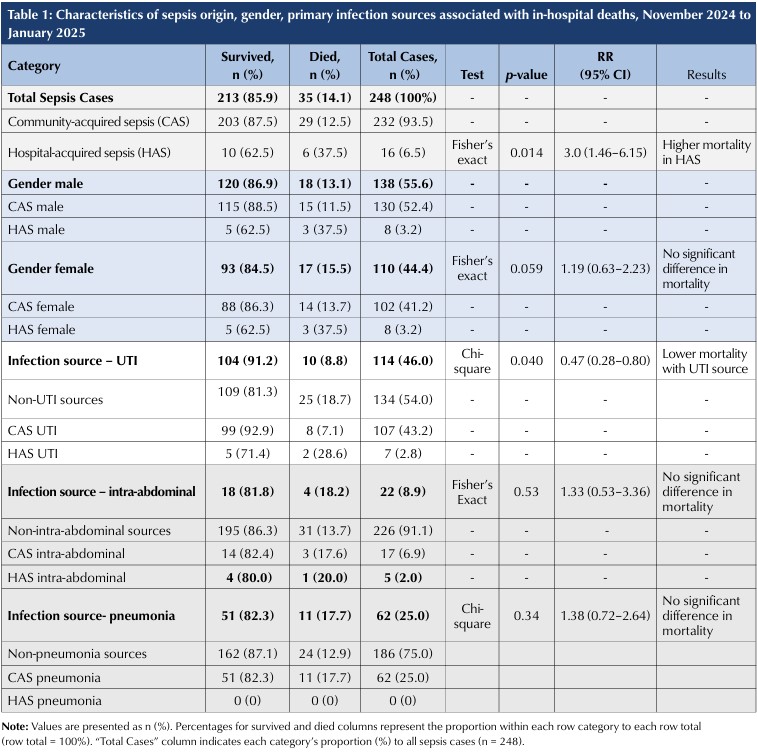
During the 12-week study period (Table 1), the IPAC team received 248 real-time electronic sepsis diagnosis notification alerts on the IPAC worklists. Of these, 232 (93.5%) cases were classified as CAS and 16 (6.5%) as HAS. Overall, 213 (85.9%) cases survived and 35 (14.1%) died during hospitalization. Mortality was significantly higher among HAS cases (6/16, 37.5%) compared to CAS (29/232, 12.5%) (RR = 3.0, 95% CI [1.46, 6.15], p = 0.014).
Overall, sepsis occurred more frequently among males, who accounted for 55.6% of all sepsis cases (138/248), compared with females (44.4%, 110/248). Assessing gender-specific sources of sepsis cases, CAS comprised most cases in both genders, occurring in 94.2% of male sepsis cases (130/138) and 92.7% of female sepsis cases (102/110). Similarly, HAS occurred in a comparable proportion in both females (7.3%; 8/110) and males (5.8%; 8/138). Also, no significant differences in mortality were observed by gender (RR=1.19, 95% CI [0.63-2.23], p = 0.59). The mean age of patients with HAS was 68.9 years.
Infection sources
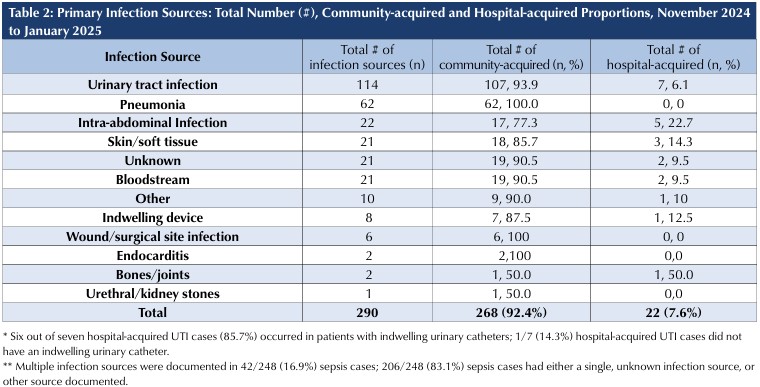
A total of 290 physician-documented infection sources were identified, of which 268 (92.4%) were community-acquired and 22 (7.6%) hospital-acquired. Among the 268 community-acquired sources, urinary tract infections (UTI) were most frequent (107, 39.93%), followed by pneumonia (62, 23.13%), bloodstream (19, 7.09%), unknown (19, 7.09%), skin/soft tissue (18, 6.72%), intra-abdominal (17, 6.34%), other (9, 3.36%), indwelling device (7, 2.61%), wound/surgical site infection (6, 2.24%), endocarditis (2, 0.75%), bones/joints (1, 0.37%), urethral/kidney stones (1, 0.37%).
Among 22 HAI sources, UTI predominated (7, 31.80%) followed by intra-abdominal infection (5, 22.73%), skin/soft tissue (3, 13.64%), bloodstream (2, 9.09%), unknown (2, 9.09%), indwelling device (1, 4.55%), bones/joints (1, 4.55%), other (1, 4.55%).
Multiple infection sources were documented in 42 of 248 sepsis cases (16.9%), while the remaining 206 cases (83.1%) had either a single or unknown infection source. Of the 114 UTI cases, seven (6.1%) were hospital-acquired and 107 (93.9%) were community-acquired. Among patients with hospital-acquired UTI, 6 of 7 (85.7%) had an indwelling urinary catheter, whereas one patient (14.3%) did not. Table 2 summarizes the distribution of infection sources stratified by acquisition type (community-acquired vs. hospital-acquired).
As shown in Table 1, the mortality among patients with a UTI source of sepsis was 8.8% (10/114), compared to 18.7% (25/134) among those with non-UTI sources (RR = 0.47, 95% CI [0.28, 0.80], p = 0.040). Mortality among patients with intra-abdominal infection sources was 18.2% (4/22), compared with 13.7% (31/226) among patients with other infection sources (RR 1.33, CI [0.53, 3.36], p = 0.53).
Mortality among patients with pneumonia was 17.7% (11/62) compared with 12.9% (24/186) non-pneumonia sources (RR = 1.38, 95% CI [0.72–2.64], p = 0.34).
Hospital-acquired sepsis surveillance
Among the 248 sepsis cases, 196 microbial isolates were identified, 20 cultures were negative, and 32 organisms could not be identified. Most positive isolates (181/196, 92.3%) were associated with CAS, while 15 isolates (7.7%) were associated with HAS. All negative cultures (20/20) occurred in CAS cases. Unidentified organisms were reported in 31 CAS cases, and one HAS case.
Out of 196 positive isolates, Gram-negative organisms accounted for 101 isolates (51.53%) with the most frequently identified organism being Escherichia coli (34, 17.36%), and ESBL-producing E. coli (6, 3.06%), followed by Pseudomonas aeruginosa (19, 9.69%), Klebsiella pneumoniae (11, 5.61%), Proteus mirabilis (6, 3.06%), Citrobacter freundii (5, 2.55%), Klebsiella oxytoca (4, 2.04%), Enterobacter cloacae (3, 1.53%), and unspecified Gram-negative bacilli (3, 1.53%). Less frequently identified were Enterobacter aerogenes (1, 0.51%), Klebsiella variicola (1, 0.51%), Proteus vulgaris (1, 0.51%), Serratia marcescens (1, 0.51%), Haemophilus influenzae (1, 0.51%), Stenotrophomonas maltophilia (1, 0.51%), Acinetobacter ursingii (1, 0.51%), Acinetobacter radioresistens (1, 0.51%), Citrobacter amalonaticus (1, 0.51%), and Citrobacter farmeri (1, 0.51%).
Out of 196 positive isolates, Gram-positive organisms accounted for 71 isolates (36.22%) with the most common as Enterococcus faecalis (14, 7.14%), followed by methicillin-sensitive Staphylococcus aureus (13, 6.63%), methicillin-resistant Staphylococcus aureus (10, 5.10%), Enterococcus faecium (6, 3.06%), Clostridioides difficile (5, 2.55%), coagulase-negative staphylococci (4, 2.04%), vancomycin-resistant enterococci (2, 1.02%). Less frequently identified were Group B Streptococcus (2, 1.02%), Streptococcus pyogenes (2, 1.02%), Streptococcus pneumoniae (2, 1.02%), Group G Streptococcus (1, 0.51%), Streptococcus viridans (1, 0.51%), Streptococcus dysgalactiae (1, 0.51%), Streptococcus anginosus group (1, 0.51%), Listeria monocytogenes (1, 0.51%), Staphylococcus hominis (1, 0.51%), Staphylococcus lugdunensis (1, 0.51%), Staphylococcus saprophyticus (1, 0.51%), Gram-positive cocci in clusters (1, 0.51%), and Gram-positive bacilli (2, 1.02%).
Fungal organisms accounted for 18 (9.18%) isolates with unspecified yeast (9, 4.59%), Candida albicans (8, 4.08%), and Candida parapsilosis (1, 0.51%). Three (1.53 %) anaerobic organisms infrequently identified were Bacteroides fragilis (1, 0.51%), Fusobacterium necrophorum (1, 0.51%), and Prevotella denticola (1, 0.51%). Three (1.53%) viral pathogens identified were comprised of COVID-19 (2, 1.02%) and adenovirus (1, 0.51%).
DISCUSSION
The study highlights a useful strategy for sepsis surveillance. HAS was associated with significantly higher mortality compared to CAS and an approximately three-fold increased risk of death. This observation underscores the need for early identification of HAIs that may lead to sepsis and eventual mortality.
Urinary tract infection (UTI) was the most frequently identified source of sepsis in both HAS and CAS. However, patients with UTI-associated sepsis had a significantly lower mortality risk compared to those with non-UTI infection sources. Hospital-acquired UTI represented nearly one-third of infection sources, with most occurring in patients with indwelling urinary catheters. This finding is consistent with prior sepsis outcome studies (Ginestra et al., 2024; Rhee et al., 2019; Westphal et al., 2019).
Reducing unnecessary catheter use and ensuring timely removal remain key interventions to prevent catheter-associated urinary tract infections and their progression to sepsis.
Patients with UTI-associated sepsis had a significantly lower mortality risk (53%) compared to those with non-UTI infection sources. This may reflect earlier recognition and defined treatment pathways and aligns with global epidemiology (Prest et al., 2022), where UTI is identified as a major sepsis source with lower mortality rates. In this cohort, most patients with hospital-acquired UTI had indwelling urinary catheters (6/7, 85.7%). This finding concurs with studies demonstrating that urinary catheters are among the most commonly used devices and are significantly associated with increased odds of sepsis (Ahiawodzi et al., 2020).
Intra-abdominal infections ranked as the third most common source of sepsis cases, representing 8.9% (22/248) of cases in this cohort. They ranked as the second most common HAS source (22.7%; 5/22) and the sixth most common CAS source (6.3%; 17/268). Intra-abdominal infections were associated with a non-significant 33% increase in relative mortality risk. This finding is clinically relevant, as intra-abdominal infections have been reported as the second most common source of sepsis after pneumonia (Hecker et al., 2019; Liu et al., 2025).
Although pneumonia is reported as the leading source of sepsis worldwide (Azkarate et al., 2025), in our cohort, pneumonia was the second most frequent source of sepsis cases (25.0%; 62/248). Pneumonia was also associated with a non-significant 38% increase in the relative risk for mortality. Although pneumonia is frequently cited as the leading source of sepsis in ICU-based studies, this study demonstrates a more mixed picture. Also, recent pan-Canadian data show no statistically significant difference in mortality among hospitalized patients with community-acquired pneumonia after adjustment, underscoring that outcomes are mediated by severity of illness and host factors rather than infection source alone (Tsang et al., 2024).
The most frequently identified organisms in the current study were Escherichia coli, Pseudomonas aeruginosa, and Enterococcus faecalis, reflecting common pathogens often associated with urinary and gastrointestinal infections (Klein et al., 2020; Vogelaers et al., 2021).
Gender-based differences were also observed, with males more likely to develop sepsis, consistent with Thompson et al. (2022). In contrast, HAS occurred more frequently in females in our cohort, reflecting the heterogeneity regarding gender-based differences in HAS. Although sepsis incidence spiked in January 2025, potentially due to seasonal increases in respiratory and gastrointestinal infections, this study found that respiratory sources were more common in CAS.
Most sepsis cases occurred in patients ≥65 years of age, supporting evidence that older adults are at substantially higher risk of sepsis and related hospitalization (Sepsis Alliance, 2026).
Comparison of discharge-based HAS reporting with real-time IPAC surveillance metrics demonstrated fewer HAS cases. Therefore, integrating real-time surveillance may allow earlier source investigation, strengthen surveillance accuracy, and support IPAC-targeted interventions.
Integrating education initiatives with implementation of the IPAC sepsis surveillance program enhanced clinical awareness, promoted best practices, and advanced IPAC program goals aimed at reducing HAS. This combined approach supports the role of education as a key enabler of sustainable IPAC efforts.
Limitations
This study was conducted during the early implementation of a new EHR, which introduced workflow challenges, learning curves, and potential data inconsistencies. Resource constraints and high sepsis volumes limited full IPAC participation, and IPAC workload was not quantitatively measured, restricting assessment of sustainability. Data collection was labour intensive and affected by duplicate alerts, discharge documentation delays, and competing diagnoses, increasing the risk of misclassification. Additional resources from the Quality department assisted in resolving workload challenges.
Defining HAS based on documentation occurring more than 48 hours after arrival may not accurately reflect true infection onset, introducing potential classification bias. The small number of HAS cases limited statistical power, contributing to non-significant findings despite clinically meaningful effect sizes. Limited availability of comorbidity, severity of illness, and treatment timing data constrained adjustment for confounders. Finally, the sample size and short observation period may limit generalizability.
CONCLUSION
IPAC education and surveillance can be essential components in combating HAS. This project describes the value of an IPAC-driven surveillance program through enhanced education, real-time identification of sepsis events through electronic alerts, timely investigation of infection sources, microbiology results, and accurate classification of CAS and HAS. To our knowledge, this is the first quality improvement initiative to highlight the integral role of IPAC programs in supporting hospital sepsis performance programs and multidisciplinary teams in sepsis prevention.
Future research will establish trends to guide prevention strategies targeting modifiable risk factors for HAS events, as well as evaluate the impact of IPAC surveillance systems on clinical outcomes. Continued investment in surveillance technologies, education, and research is essential to advancing IPAC practices, reducing sepsis burden, and improving patient outcomes.
REFERENCES
Ahiawodzi, P., Okafor, I., Chandler, S., Kelly, K., & Thompson, D. K. (2020). Indwelling medical device use and sepsis risk at a health professional shortage area hospital: Possible interaction with length of hospitalization. American Journal of Infection Control, 48(10), 1189–1194. https://doi.org/10.1016/j.ajic.2020.02.014
Alsolamy, S., Salamah, M. A., Thagafi, M. A., Al-Dorzi, H. M., Marini, A. M., Aljerian, N., et al. (2014). Diagnostic accuracy of a screening electronic alert tool for severe sepsis and septic shock in the emergency department. BMC Medical Informatics and Decision Making, 14, Article 105. https://doi.org/10.1186/1472-6947-14-105
Amland, R. C., & Sutariya, B. B. (2018). Quick Sequential (Sepsis-Related) Organ Failure Assessment (qSOFA) and St. John Sepsis Surveillance Agent to detect patients at
risk of sepsis: An observational cohort study. American Journal of Medical Quality, 33(1), 50–57. https://doi.org/10.1177/1062860617692034
Azkarate, I., Salas, E., Cabarcos, E., Ganzarain, M., Quevedo, I., Elósegui, I., & Eguibar, I. (2025). Respiratory sepsis: A 12-year prospective observational study in critically ill patients. Respiratory Medicine, 249, Article 108476. https://doi.org/10.1016/j.rmed.2025.108476
Barrett, K., & Sheikh, F. (2024, November 19). Reducing the burden of sepsis in Canada: A need for a national sepsis action plan [Conference presentation]. Third Annual Antimicrobial Resistance (AMR) Symposium, Toronto, ON, Canada. http://sepsisnationalactionplan.ca
Bloos, F. (2020). The importance of a hospital-dedicated sepsis response team. Expert Review of Anti-Infective Therapy, 18(12), 1235–1243. https://pubmed.ncbi.nlm.nih.gov/32662689/
Canadian Institute for Health Information. (2024). In-hospital sepsis. https://www.cihi.ca/en/indicators/in-hospital-sepsis
Centers for Disease Control and Prevention. (2023). Hospital sepsis management and practices: Findings from the 2023 NHSN annual survey. U.S. Department of Health and Human Services. https://www.cdc.gov/sepsis/media/pdfs/hospital-2023-annual-survey-508.pdf
Centers for Disease Control and Prevention. (2025). Hospital sepsis program core elements. U.S. Department of Health and Human Services.
https://www.cdc.gov/sepsis/hcp/core-elements/index.html
Chan, P., Peake, S., Bellomo, R., & Jones, D. (2016). Improving the recognition of, and response to, in-hospital sepsis. Current Infectious Disease Reports, 18(7), Article 20.
https://pubmed.ncbi.nlm.nih.gov/27193917/
Currey, E. M., Falconer, N., Isoardi, K. Z., & Barras, M. (2024). Impact of pharmacists during in-hospital resuscitation or medical emergency response events: A systematic review. American Journal of Emergency Medicine, 75, 98–110. https://pubmed.ncbi.nlm.nih.gov/37939522/
Dantes, R. B., Kaur, H., Bouwkamp, B. A., Haass, K. A., Patel, P., Dudeck, M. A., et al. (2023). Sepsis program activities in acute care hospitals—National Healthcare Safety Network, United States, 2022. Morbidity and Mortality Weekly Report, 72(34), 907–911.
Evans, L., Rhodes, A., Alhazzani, W., Antonelli, M., Coopersmith, C. M., French, C., et al. (2021). Surviving Sepsis Campaign: International guidelines for management of sepsis and septic shock 2021. Intensive Care Medicine, 47(11), 1181–1247. https://doi.org/10.1007/s00134-021-06506-y
Garvey, M. (2024). Hospital acquired sepsis, disease prevalence, and recent advances in sepsis mitigation. Pathogens, 13(6), Article 461.
Ginestra, J. C., Coz Yataco, A. O., Dugar, S. P., & Dettmer, M. R. (2024). Hospital-onset sepsis warrants expanded investigation and consideration as a unique clinical entity. CHEST, 165(6), 1421–1430. https://doi.org/10.1016/j.chest.2024.01.028
Guarino, M., Perna, B., Cesaro, A. E., Maritati, M., Spampinato, M. D., Contini, C., & De Giorgio, R. (2023). Update on sepsis and septic shock in adult patients: Management in the emergency department. Journal of Clinical Medicine, 12(9), Article 3188. https://doi.org/10.3390/jcm12093188
Hagel, S., Ludewig, K., Pletz, M. W., Frosinski, J., Moeser, A., Wolkewitz, M., et al. (2019). Effectiveness of a hospital-wide infection control programme on the incidence of healthcare-associated infections and associated severe sepsis and septic shock: Prospective interventional study. Clinical Microbiology and Infection, 25, 462–468.
https://doi.org/10.1016/j.cmi.2018.07.010
Hecker, A., Reichert, M., Reuß, C. J., Schmoch, T., Ridel, J. G., Schneck, E., Padberg, W., Weigand, M. A., & Hecker, M. (2019). Intra-abdominal sepsis: New definitions and current clinical standards. Langenbeck’s Archives of Surgery, 404, 257–271. https://doi.org/10.1007/s00423-019-01752-7
Institute for Healthcare Improvement. (2023). Plan-Do-Study-Act (PDSA) worksheet. https://www.ihi.org/resources/tools/plan-do-study-act-pdsa-worksheet
Jolley, R. J., Quan, H., Jette, N., Sawka, K. J., Diep, L., Goliath, J., et al. (2015). Validation and optimisation of an ICD-10-coded case definition for sepsis using administrative health data.
BMJ Open, 5(12), Article e009487. https://doi.org/10.1136/bmjopen-2015-009487
Klein, R., & Hultgren, S. J. (2020). Urinary tract infections: Microbial pathogenesis, host–pathogen interactions and new treatment strategies. Nature Reviews Microbiology, 18, 211–226. https://doi.org/10.1038/s41579-020-0324-0
Liu, Y. Z., Chu, R., Lee, A., Gomersall, C. D., Zhang, L., Gin, T., et al. (2020). A surveillance method to identify patients with sepsis from electronic health records in Hong Kong: A single-centre retrospective study. BMC Infectious Diseases, 20, Article 652. https://doi.org/10.1186/s12879-020-05330-x
Liu, Y., Wei, Z., Liu, W., Hao, H., Ba, T., Zhang, S., Bao, B., Li, C., K, L., & Zhang, F. (2025). Sepsis-related multi-organ dysfunction: A global perspective on lung and gastrointestinal mortality and management framework. BMC Infectious Diseases, 26, Article 142. https://doi.org/10.1186/s12879-025-12062-3
Markwart, R., Saito, H., Harder, T., Tomczyk, S., Cassini, A., Fleischmann-Struzek, C., et al. (2020). Epidemiology and burden of sepsis acquired in hospitals and intensive care units: A systematic review and meta-analysis. Intensive Care Medicine, 46, 1536–1551. https://doi.org/10.1007/s00134-020-06106-2
McDonald, C. M., West, S., Dushenski, D., Lapinsky, S. E., Soong, C., Van den Broek, K., et al. (2018). Sepsis now a priority: A quality improvement initiative for early sepsis recognition and care. International Journal for Quality in Health Care, 30(10), 802–809. https://doi.org/10.1093/intqhc/mzy121
Motzkus, C. A., & Luckmann, R. (2017). Does infection site matter? A systematic review of infection site mortality in sepsis. Journal of Intensive Care Medicine, 32(8), 473–479. https://doi.org/10.1177/0885066615627778
Ogrinc, G., Davies, L., Goodman, D., Batalden, P. B., Davidoff, F., & Stevens, D. (2016). SQUIRE 2.0 (Standards for Quality Improvement Reporting Excellence): Revised publication guidelines from a detailed consensus process. BMJ Quality & Safety, 25(12), 986–992. https://www.squire-statement.org/
Orosz, J., Bailey, M., Udy, A., Pilcher, D., Bellomo, R., & Jones, D. (2020). Unplanned ICU admission from hospital wards after rapid response team review in Australia and New Zealand. Critical Care Medicine, 48(7), e550–e556. https://pubmed.ncbi.nlm.nih.gov/32304417/
Prest, J., Nguyen, T., Rajah, T., Prest, A. B., Sathananthan, M., & Jeganathan, N. (2022). Sepsis-related mortality rates and trends based on sites of infection. Critical Care Explorations, 4(10), e0775. https://doi.org/10.1097/CCE.0000000000000775
Rhee, C., Kadri, S., Huang, S. S., Murphy, M. V., Li, L., Platt, R., & Klompas, M. (2016). Objective sepsis surveillance using electronic clinical data. Infection Control & Hospital Epidemiology, 37(2), 163–171. https://doi.org/10.1017/ice.2015.264
Rhee, C., Wang, R., Zhang, Z., Fram, D., Kadri, S. S., & Klompas, M. (2019). Epidemiology of hospital-onset versus community-onset sepsis in U.S. hospitals and association with mortality: A retrospective analysis using electronic clinical data. Critical Care Medicine, 47(9), 1169–1176. https://doi.org/10.1097/CCM.0000000000003817
Sepsis Canada. (2024). What is sepsis? https://www.sepsiscanada.ca/about/what-is-sepsis
Sepsis Alliance. (2026). Sepsis and aging. https://www.sepsis.org/sepsisand/aging/
Shappell, C. N., Klompas, M., & Rhee, C. (2020). Surveillance strategies for tracking sepsis incidence and outcomes.The Journal of Infectious Diseases, 222(Suppl. 2), S74–S83. https://doi.org/10.1093/infdis/jiaa102
Szabo, B. G., Kiss, R., Lenart, K. S., Marosi, B., Vad, E., Lakatos, B., & Ostorhazi, E. (2019). Clinical and microbiological characteristics and outcomes of community-acquired sepsis among adults: A single-center, 1-year retrospective observational cohort study from Hungary. BMC Infectious Diseases, 19, Article 584. https://doi.org/10.1186/s12879-019-4219-5
Thompson, K. J., Finfer, S. R., Woodward, M., Leong, R. N. F., & Liu, B. (2022). Sex differences in sepsis hospitalisations and outcomes in older women and men: A prospective cohort study. Journal of Infection, 84(6), 770–776. https://doi.org/10.1016/j.jinf.2022.04.035
Tricco, A. C., Langlois, E. V., & Straus, S. E. (2017). Rapid reviews to strengthen health policy and systems: A practical guide. World Health Organization. https://www.who.int/publications/i/item/9789241512763
Tsang, J. L. Y., Rego, K., Binnie, A., Lee, T., McCarthy, A., Juthaporn, J., et al. (2024). Community versus academic hospital community-acquired pneumonia patients:
A nested cohort study. Pneumonia, 16, 31. https://doi.org/10.1186/s41479-024-00143-x
Vogelaers, D., Blot, S., Van den Berghe, A., & Montravers, P. (2021). Antimicrobial lessons from a large observational cohort on intra-abdominal infections in intensive
care units. Drugs, 81(9), 1065–1078. https://doi.org/10.1007/s40265-021-01534-w
Westphal, G. A., Pereira, A. B., Fachin, S. M., Barreto, A. C. C., Bornschein, C. G. J., Filo, M. C., & Koenig, A. (2019). Characteristics and outcomes of patients with community-acquired and hospital-acquired sepsis. Revista Brasileira de Terapia Intensiva, 31(1), 71–78. https://doi.org/10.5935/0103-507X.20190013
World Health Organization. (2020). Global report on the epidemiology and burden of sepsis: Current evidence, identifying gaps and future directions.
https://www.who.int/publications/i/item/9789240010789
World Health Organization. (2024). Sepsis. https://www.who.int/news-room/fact-sheets/detail/sepsis
Zoutman, D. E., Ford, B. D., Bryce, E., Gourdeau, M., Hebert, G., Henderson, E., et al. (2003). The state of infection surveillance and control in Canadian acute care hospitals. American Journal of Infection Control, 31(5), 266–272. https://www.sciencedirect.com/science/article/abs/pii/S0196655303000865